#101 The Hidden State
ASSIGNMENT PURPOSE
"For the master's tools will never dismantle the master's house. They may allow us temporarily to beat him at his own game, but they will never enable us to bring about genuine change." — Audre Lorde
In the Texas of 2026, the "Master’s House" has become increasingly visible through surveillance and the hollowing out of public discourse. We find ourselves in a moment where speaking directly can lead to erasure.
Texas Poetry Assignment invites submissions for a special new series titled "The Hidden State."
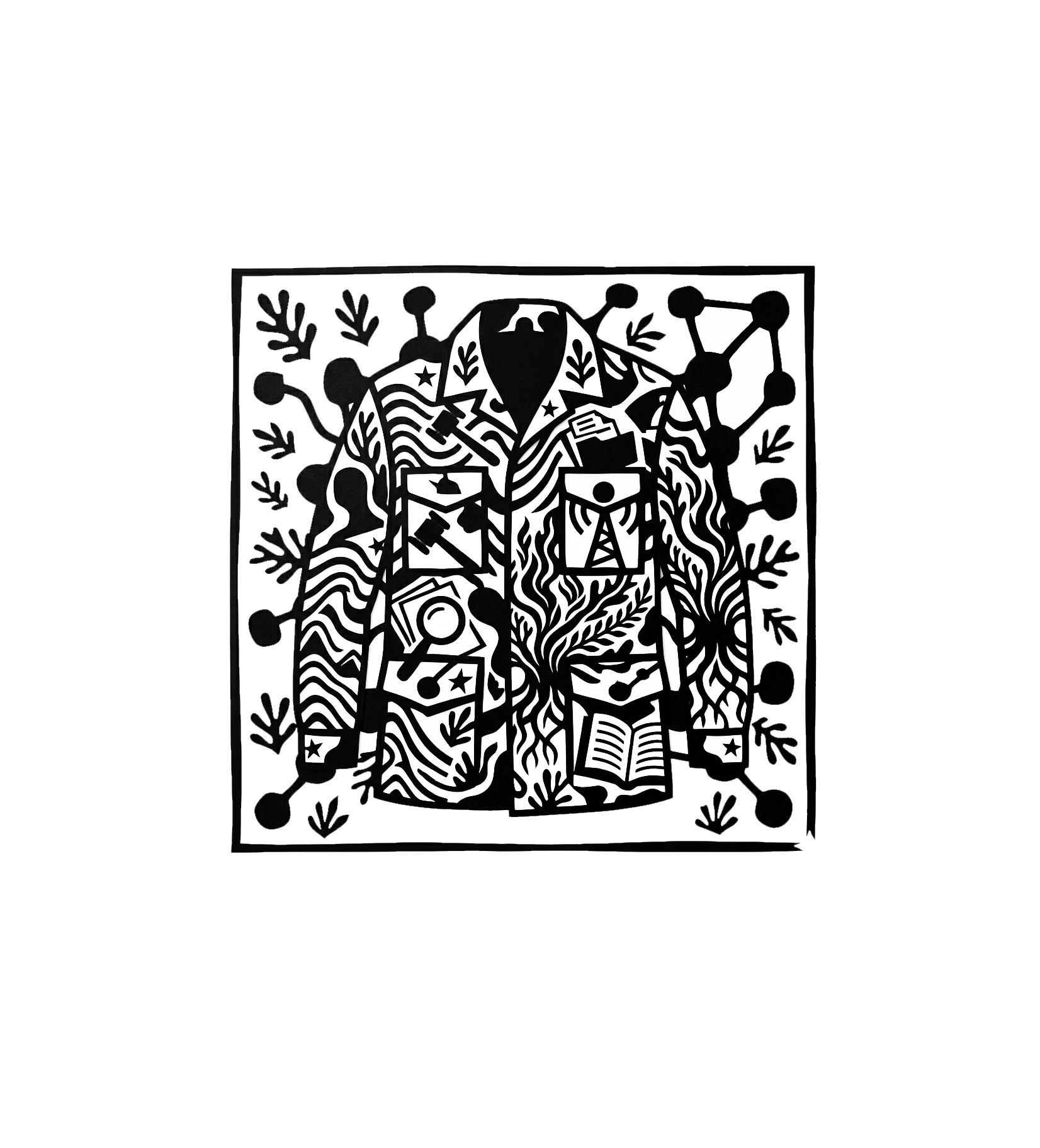
We are seeking poems that do not merely protest, but inhabit. We want poems that use the "Master’s Tools"—the cold, sterile registers of the institution—to build a "Hidden State" for the truths that can no longer safely reside in the public transcript.
THE RHETORIC OF POETIC CAMOFLAUGE
FOUR OPTIONS FOR “HOUSING” A MARGINALIZED TRUTH OR PROHIBITED NARRATIVE
To achieve successful Opacity, practitioners must select the most resilient enclosure or shell based on the localized threat assessment:
PATTERN 1: Environmental Organic– Utilizes botanical, biological, and geological registers as universal proxies for prohibited human narratives. Hiding by Growing: Burying the human signal within dense, "neutral" biological or geological noise.
PATTERN 2: Historical Topographical– Employs archival temporal distancing, layering modern crisis over antiquated deeds, census records, and colonial maps. Hiding by Bordering: Flattening a modern crisis into the safety of distant archival records, colonial maps, or topographical boundaries.
PATTERN 3: Kinetic Relational – Documents displacement and movement through the technical syntax of GPS metadata, surveillance "Pings," and logistical transit logs. Hiding by Connecting: Dispersing identity across a moving, interconnected web or rhythm that a static audit cannot pin down.
PATTERN 4: Bureaucratic Structural– The most aggressive tier; inhabits the sterile register of the state to establish autonomous, unreadable zones within official documentation. Hiding by Anchoring: Mimicking the cold, rigid geometry and jargon of the oppressor (audits, compliance metrics) to build a "Mirror Cipher" of over-compliance.
“The Hidden State” Workshop
On Sunday, March 15, 2026, 6 - 8 pm CST, join Laurence Musgrove for a discussion of this assignment, the growth of state-sponsored surveillance and silencing, as well as the four-tiered strategies above, along with samples from each. Materials from the workshop are here.
Submission Guidelines
The Poem: One poem (max 50 lines) that adopts a "compliant" technical or bureaucratic register as its primary skin.
The Lordean Key: Each submission must include a brief (150-word) "Key." This is your aesthetic and rhetorical justification: explain the "Heartbeat" (the truth) you are protecting and how the chosen pattern functions as a defensive rhetorical act.
The Pilot: Selected poems will be published in TPA and will serve as primary evidence for a more extended call distributed to poets in other literary organizations in the state.
Deadline: April 15, 2026.
Poems will be published as accepted here.
HOW TO SUBMIT
Poetry submissions should be saved in Microsoft Word document format and composed in Times New Roman, 12-point font. They should be attached to an email addressed to editor@texaspoetryassignment.org and also include a brief cover letter and a 50-word biography within the body of the email.
BUY ME A COFFEE
This site charges no submission fees and is mostly run on coffee. You can buy me a cup here.
ACCEPTANCE AND PUBLICATION
Upon acceptance, poems will be published on the first Sunday of the month.
PUBLICATION RIGHTS
Writers will retain all rights to their work published on this site.
FORMAL INTERESTS
We are specifically interested in poems that demonstrate careful attention to the elements of shape, line, music, comparison, and balance, and especially how those choices contribute to the cooperative harmony of structure and sentiment in the poem.
Poems that do not meet these interests may be declined. For more on this perspective, see the five formal causes of beauty in poetry.
We also challenge you to consider new choices you might take in the audience and poetic form as they pertain to aspects of narrative perspective, shape, sound, repetition, and enjambment.